Tag: enterprise-architecture
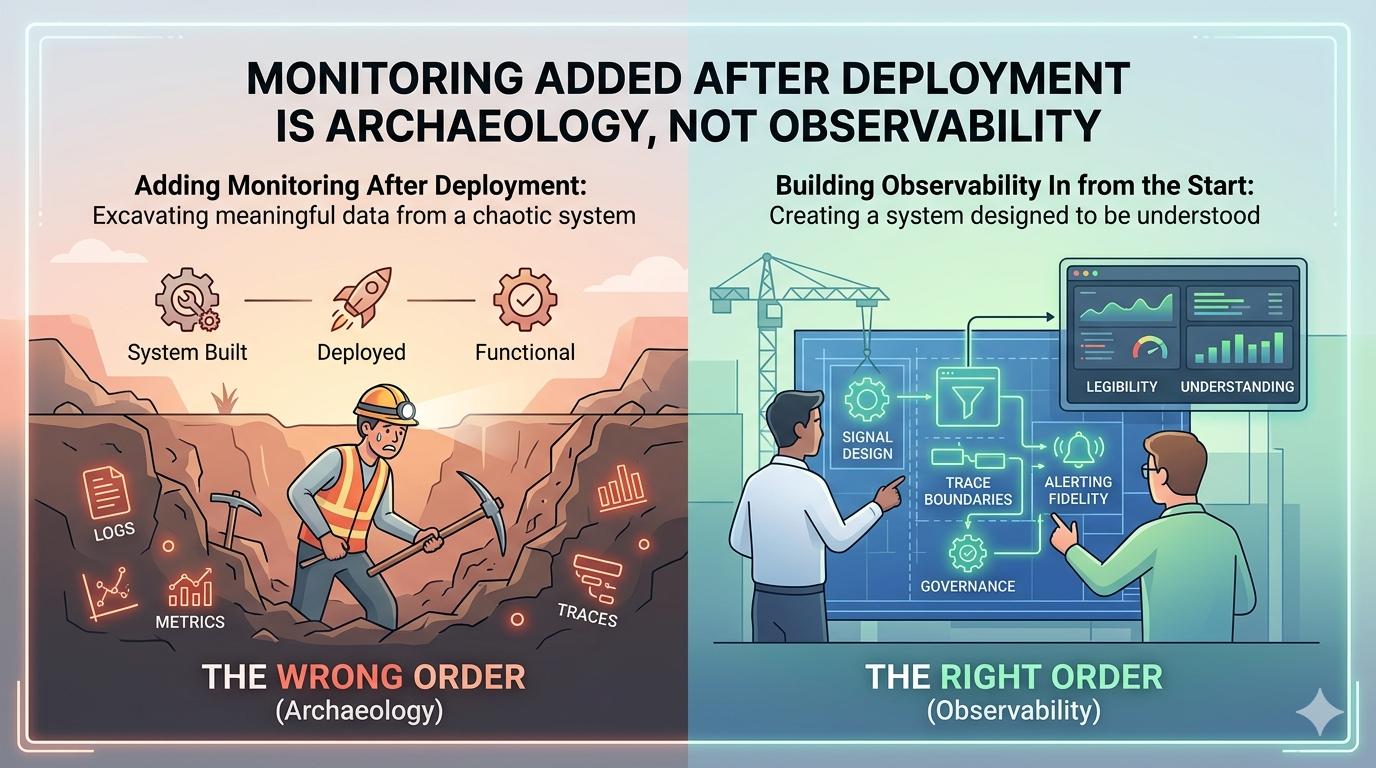
Observability is not a monitoring add-on. It is an architectural constraint. Systems built without observability baked in cannot be understood, cannot be governed, and cannot be improved. The OSAF model tells you exactly where your architecture is blind.
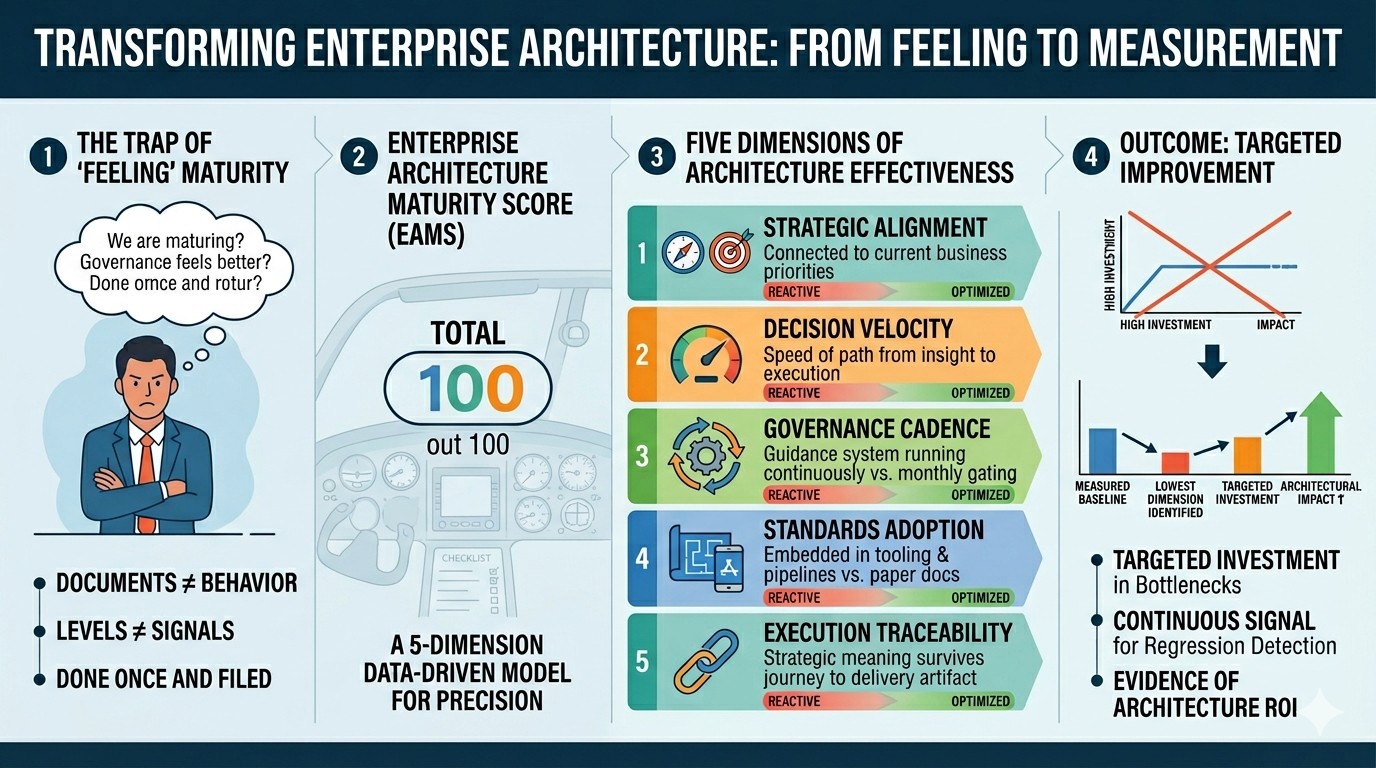
Enterprise architecture maturity is not a feeling. It is a score. Organizations that cannot measure their architecture maturity cannot improve it. The EAMS model gives you the score.
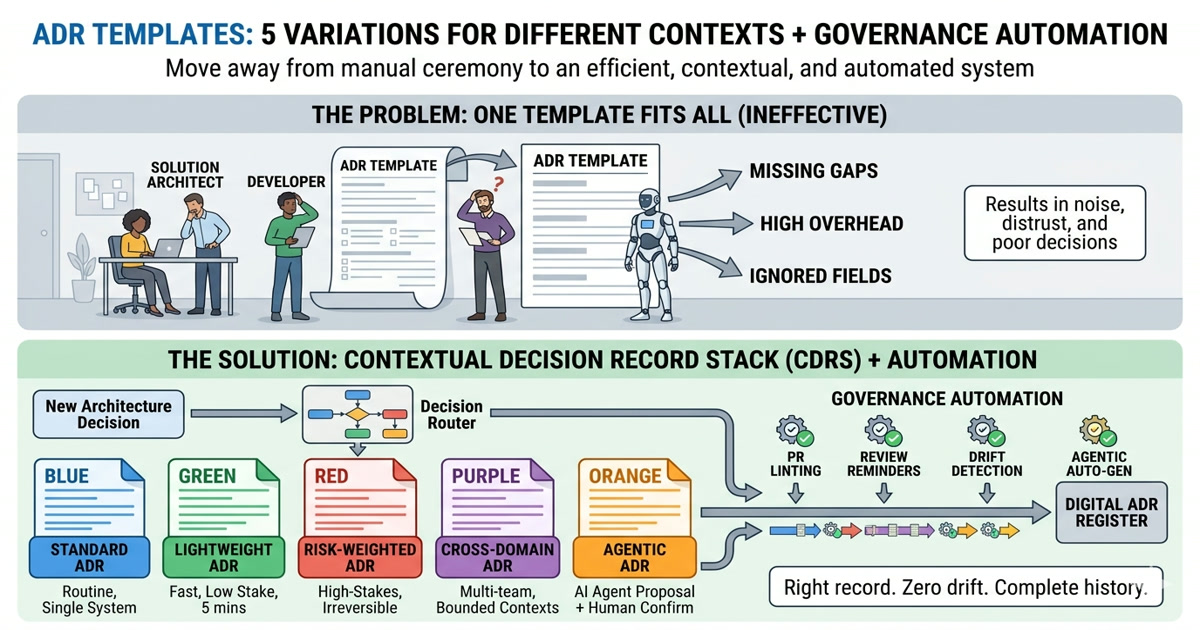
One ADR template does not fit every architectural context. Five purpose-built variations — for standard decisions, agentic AI, cross-domain impact, fast delivery, and high-risk reversals — plus governance automation to make the system run without manual follow-up.
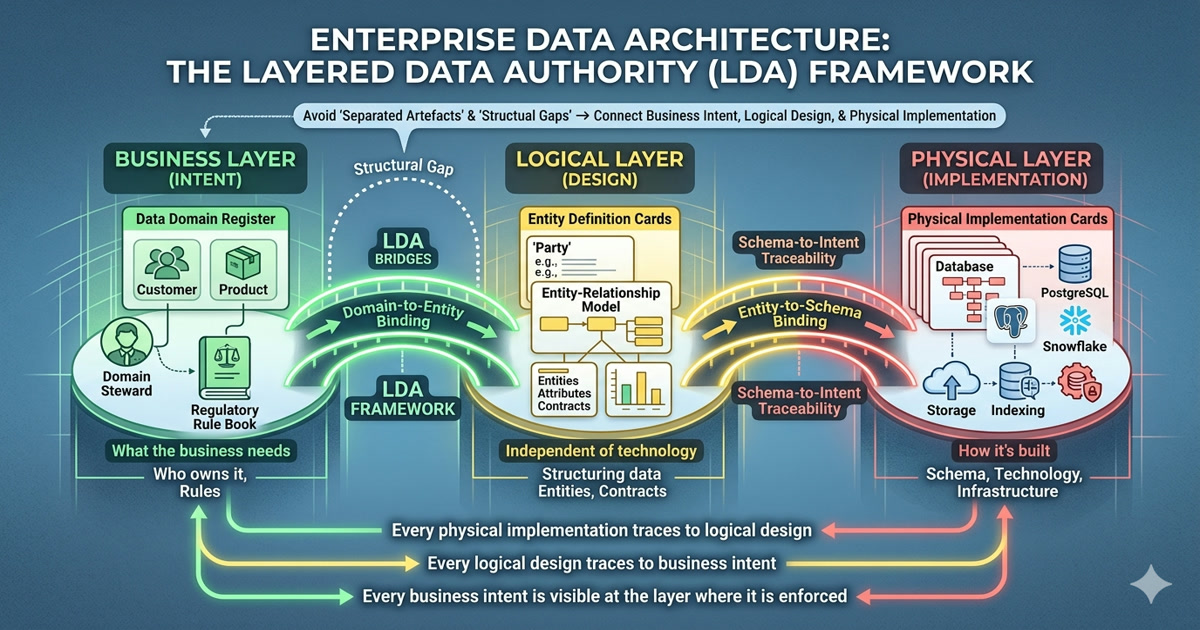
Most enterprises build data architectures one layer at a time. Business, logical, and physical layers exist as separate artefacts owned by separate teams. That separation is the structural gap that makes data estates ungovernable.
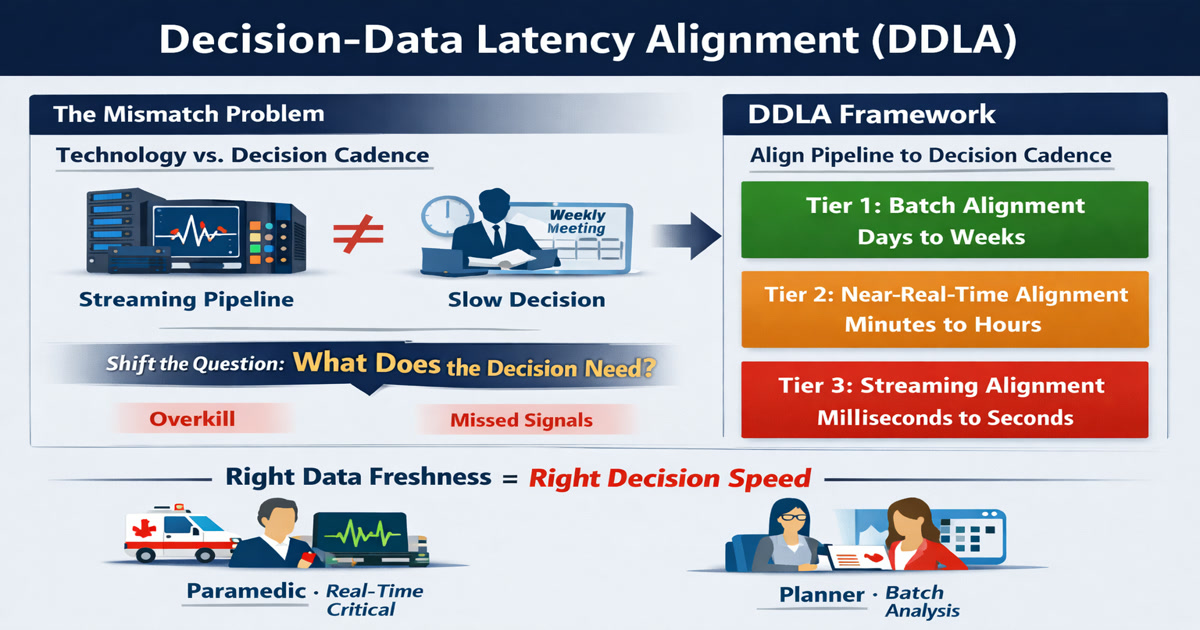
Organisations debate batch versus real-time as if it is a technical preference. It is not. It is a structural mismatch between data freshness and decision cadence — and the mismatch is where the cost lives.